Wandering Through Fire and Faith: Nepal’s Living Festival in Patan
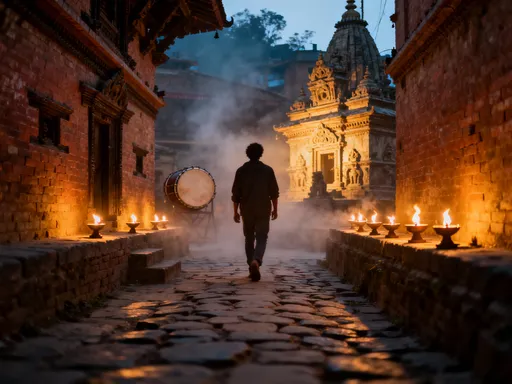
You know what’s wild? Stepping into Patan during festival season feels like walking into a living story—temples glowing, drums pounding, streets breathing with ritual. I never expected such raw spirituality just from wandering alleys at dawn. This isn’t performance—it’s life, unchanged for centuries. If you’ve ever wondered where tradition still pulses in every step, this is it. Let me take you through the fire-lit heart of Patan’s most soul-stirring celebrations.
The Rhythm of Patan: A City That Lives Its Festivals
Patan, also known as Lalitpur, rests in the southeastern corner of the Kathmandu Valley, a city where time seems to fold into itself. Unlike modern urban centers shaped by speed and convenience, Patan moves to the beat of temple bells and the rhythm of seasonal festivals. As a UNESCO World Heritage Site, its Durbar Square stands as a testament to centuries of artistic mastery, with intricately carved wooden windows, tiered temples, and courtyards that have hosted rituals long before tourism existed. Yet the true soul of Patan isn’t found in guidebooks or museum plaques—it lives in the way daily life intertwines with devotion, especially during festival season.
Festivals in Patan are not scheduled events designed for outsiders. They are organic expressions of community identity, rooted in the Newari culture that has flourished here for over a millennium. The Newar people, the original inhabitants of the valley, have preserved their language, cuisine, and spiritual practices through generations, often blending Hindu and Buddhist traditions in seamless harmony. When a festival begins, there’s no grand opening ceremony announced over loudspeakers—instead, you notice the shift gradually. The scent of marigolds fills the air, red prayer flags flutter above alleyways, and the sound of cymbals and drums grows louder toward the temples.
What makes Patan extraordinary is that the most profound experiences often come from unplanned moments. A mother lighting oil lamps in a stone niche. An elderly man spinning a prayer wheel with closed eyes. Children in bright red and gold costumes rehearsing dances in a courtyard. These glimpses aren’t staged for cameras; they are part of the fabric of life. Visitors who come with open hearts and quiet curiosity often find themselves welcomed into these moments, not as tourists, but as respectful observers. The key is not to follow a strict itinerary, but to wander with awareness—letting the city reveal itself one alley, one temple, one smile at a time.
Indra Jatra and the Living Gods: When Deities Walk the Streets
One of the most powerful expressions of Patan’s spiritual rhythm is Indra Jatra, a week-long festival usually held in September that honors Indra, the Hindu god of rain, thunder, and the harvest. While celebrated across the Kathmandu Valley, Patan’s version carries a distinct intimacy, shaped by its tight-knit neighborhoods and deep devotion. The festival marks the end of the monsoon and the beginning of the harvest season, a time of gratitude and renewal. But beyond its agricultural roots, Indra Jatra is also a celebration of divine presence made visible.
The most iconic moment of the festival is the procession of the Kumari, a young prepubescent girl believed to be the living incarnation of the goddess Taleju. Selected through a series of traditional criteria—including fearlessness, physical perfection, and astrological alignment—the Kumari resides in a palace in Patan’s Durbar Square. During Indra Jatra, she emerges in a richly decorated wooden chariot, pulled through the cobbled streets by devoted locals. Her face remains serene, adorned with ceremonial makeup and a golden headdress, as crowds gather to bow and offer prayers. To witness this is to see belief made tangible—a child transformed into a vessel of the divine.
Alongside the Kumari’s procession, masked dancers known as Lakhe and Pulukisi perform in the streets, their movements wild and hypnotic. The Lakhe, dressed in towering red and black costumes with fanged masks, represents a demon subdued by divine power. Their dance is not mere entertainment; it symbolizes the triumph of order over chaos. The Pulukisi, in contrast, are graceful female figures whose dance tells stories of fertility and protection. These performances occur in temple courtyards and public squares, often accompanied by live music played on traditional instruments like the damphu drum and the bansuri flute. Visitors are welcome to watch, but it’s essential to remain respectful—keeping a modest distance, avoiding flash photography, and refraining from interrupting rituals.
Timing your visit to coincide with Indra Jatra offers a rare chance to see Patan at its most spiritually alive. The festival’s main events unfold over several days, with the Kumari’s chariot procession typically taking place on the third or fourth day. Locals often gather early in the morning to secure good viewing spots, and the atmosphere is both festive and solemn. For women travelers, especially those raising children or seeking deeper cultural understanding, the experience can be profoundly moving—a reminder of how faith shapes identity, community, and continuity across generations.
Tihar Lights: A Festival of Connection and Gratitude
If Indra Jatra reveals the grandeur of Patan’s spiritual life, Tihar illuminates its quiet heart. Celebrated across Nepal in late October or early November, Tihar is a five-day festival of lights that honors not only gods and goddesses but also animals and family bonds. In Patan, where homes are built close together around shared courtyards, the festival transforms the city into a glowing mosaic of oil lamps, marigold garlands, and intricate rangoli patterns drawn with colored rice. Each evening, as dusk falls, families light diyas in doorways and windows, creating a soft, flickering glow that seems to lift the entire neighborhood into a sacred space.
The first three days of Tihar are dedicated to animals—crows, dogs, and cows—each recognized for their role in human life. On Kukur Tihar, dogs are garlanded with marigolds and offered treats, their foreheads marked with tika as a sign of blessing. It’s not uncommon to see a family dog wearing a tiny red scarf or sitting proudly beside its owner during prayers. Cows, revered in Hindu tradition, are honored on the third day with similar rituals. These acts of reverence reflect a worldview in which all life is interconnected, and gratitude extends beyond human relationships.
The fourth day, known as Govardhan Puja, celebrates the bond between humans and nature, often marked by the offering of a small mountain of food to symbolize Mount Govardhan. But for many, the emotional peak of Tihar comes on the fifth day: Bhai Tika. On this morning, sisters perform a special ritual for their brothers, applying a multi-colored tika on their foreheads, placing garlands around their necks, and circling them with a tray of offerings while chanting prayers for their long life and prosperity. In return, brothers give gifts and promise protection. The ritual is deeply personal, often unfolding in the warmth of a home courtyard, with extended family gathered around.
Walking through Patan during Tihar offers a rare glimpse into domestic spirituality. Homes often leave their doors open during the evenings, inviting neighbors and even strangers to share in the light. The scent of ghee lamps, the murmur of prayers, the laughter of children playing with small lanterns—all contribute to an atmosphere of warmth and belonging. For visitors, the invitation is not to intrude, but to witness with humility. Sitting quietly on a stone bench, watching a grandmother light a lamp for her grandson, one understands that festivals in Patan are not about spectacle—they are about connection, memory, and the quiet acts of love that sustain a culture.
Bisket Jatra and the Cosmic Tug-of-War
As spring arrives in mid-April, Patan prepares for Bisket Jatra, the New Year festival that marks the beginning of the Nepali calendar year, Bikram Sambat 2081. Unlike the reflective tone of Tihar or the devotional focus of Indra Jatra, Bisket Jatra is loud, chaotic, and exuberant—a celebration of renewal through controlled disorder. The festival’s centerpiece is the ceremonial raising and pulling of the yosin, a tall wooden pole erected in the heart of the city. The act of raising the pole symbolizes the victory of good over evil, rooted in the myth of the serpent demon who once terrorized the valley and was ultimately slain by divine forces.
The most dramatic moment occurs when two groups of men from rival neighborhoods pull on ropes attached to the yosin, each trying to drag the pole into their respective territory. This symbolic tug-of-war is not just a physical contest; it represents the cosmic struggle between order and chaos, life and death. The streets fill with energy—drums beat relentlessly, people shout, and clouds of red powder rise into the air. It’s a scene of raw, unfiltered celebration, where the boundaries between ritual and revelry blur.
For visitors, Bisket Jatra offers an electrifying experience, but it also requires preparation. The festival draws large crowds, and the narrow alleys of Patan can become packed. The best vantage points are along the main processional route near Mangal Bazaar or in the upper levels of nearby buildings, where locals often welcome guests to observe from balconies. It’s advisable to wear comfortable shoes, carry water, and avoid carrying valuables. While the atmosphere is joyful, the intensity of the crowd means that staying aware of your surroundings is essential.
Despite the noise and movement, Bisket Jatra is deeply meaningful. Elders explain that the chaos is not random—it’s a necessary release, a way to burn away the old year’s negativity and make space for new beginnings. Children run through the streets with painted faces, women toss flower petals from windows, and monks chant blessings from temple steps. The festival reminds us that renewal is not always gentle; sometimes, it must be loud, physical, and communal. For families traveling together, Bisket Jatra offers a chance to witness how tradition can be both ancient and vibrantly alive—a living inheritance passed from hand to hand.
Beyond the Calendar: Hidden Moments in Sacred Spaces
While major festivals draw the most attention, some of the most memorable experiences in Patan happen outside the official calendar. Throughout the year, small-scale pujas, temple anniversaries, and neighborhood processions take place with quiet regularity. These events may not be listed in travel guides, but they offer a deeper level of immersion. A local temple might host a monthly blessing ceremony, or a family could invite neighbors to join a private ritual for a newborn child. These moments are not performed for outsiders—they are part of the ongoing rhythm of community life.
To experience them, one must practice slow travel. This means spending more than a day or two in Patan, returning to the same courtyards, greeting the same shopkeepers, and learning to recognize the subtle signs that something sacred is about to unfold. It might be the sudden appearance of red cloth on a temple gate, the scent of sandalwood incense, or the sound of bells ringing at an unusual hour. When these signs appear, the wise traveler pauses, sits quietly, and waits.
Such moments often reveal the most intimate aspects of faith. An old woman placing a bowl of rice and yogurt before a stone statue. A group of men chanting in unison as they circle a stupa. A child offering marigolds to a priest. These acts are simple, repetitive, and deeply meaningful. They are not meant to impress; they are expressions of devotion that have been passed down for generations. For women who value tradition, family, and spiritual continuity, these quiet rituals can be more moving than any grand procession.
The sensory details linger long after the visit: the coolness of stone underfoot, the echo of prayers in a half-empty temple, the warmth of a shared cup of chiya offered by a stranger. These are the moments that transform a trip into a journey—one that touches not just the eyes, but the heart. They remind us that culture is not a performance, but a way of being, sustained by daily acts of care, memory, and belief.
How to Wander Wisely: Practical Tips for Meaningful Exploration
To fully appreciate Patan’s festivals, planning and sensitivity go hand in hand. The best times to visit are during the dry seasons: September to November, when the skies are clear and festivals like Indra Jatra and Tihar take place, and February to April, leading up to Bisket Jatra. These months offer comfortable temperatures and optimal conditions for walking through the city’s narrow lanes.
When it comes to clothing, modesty is key. Women should wear long skirts or pants and tops that cover the shoulders, especially when entering temples or attending rituals. Comfortable walking shoes are essential, as many areas are paved with uneven stones. A light scarf can serve multiple purposes—providing sun protection, covering the head when required, or doubling as a wrap during cooler evenings.
Photography is a sensitive issue. While the vibrant colors and dynamic scenes are tempting to capture, it’s important to ask permission before photographing people, especially during prayer or ritual moments. Never use flash in sacred spaces, and avoid pointing your camera at the Kumari or other deified figures unless it’s clearly permitted. In many cases, putting the camera down and simply being present leads to richer experiences—and sometimes, a smile or nod from a local can feel more valuable than any photo.
Supporting the local economy is another way to travel respectfully. Patan is renowned for its metalwork, wood carving, and handwoven textiles. Purchasing crafts directly from artisans or small cooperatives ensures that your visit contributes to the community. Similarly, eating at family-run restaurants or trying street food like bara (lentil pancakes) and yomari (sweet rice dumplings) offers both culinary delight and cultural connection. A simple “Dhanyabad” (thank you) in Nepali can go a long way in building goodwill.
Finally, silence is a form of respect. In temples and during rituals, speaking quietly or not at all allows the sacred atmosphere to remain undisturbed. Learning a few basic phrases—“Namaste” for greeting, “Kasto cha?” for “How are you?”—shows effort and openness. These small gestures, when combined with patience and humility, open doors that no guidebook can provide.
Why These Festivals Matter: Preserving Culture in a Changing World
In an age of rapid globalization, where traditions often fade under the pressure of modern life, Patan’s festivals stand as acts of quiet resistance. They are not museum pieces preserved behind glass, but living practices maintained by ordinary people—grandmothers teaching granddaughters how to make rangoli, fathers pulling chariots alongside sons, priests passing down chants in ancient languages. These festivals are not just about remembering the past; they are about affirming identity in the present.
Younger generations in Patan are increasingly engaged in preserving their heritage. Schools teach traditional dance and music, and youth groups organize cultural events to keep the knowledge alive. Social media is being used not to replace tradition, but to document and share it—photos of Tihar lamps, videos of Lakhe dances, and stories of family rituals circulate among the Nepali diaspora, creating a bridge between continents.
For travelers, especially women who value family, faith, and intergenerational wisdom, Patan offers a powerful reminder of what it means to belong to something larger than oneself. These festivals are not about entertainment; they are about continuity, gratitude, and the courage to keep going even when the world changes around you. To witness them is to be invited into a story that began long before you arrived and will continue long after you leave.
So wander not as a spectator, but as a witness. Come with respect, with stillness, with a willingness to listen. Let the drums guide your steps, the lamps light your way, and the silence between rituals speak to your heart. Return home not with just photographs, but with a deeper understanding of what it means to live with purpose, connection, and faith. In the end, that is the true gift of Patan—not just a destination, but a way of being.