Lost in Montevideo’s Soul: Where the City Breathes Through Its People
You know what? Montevideo isn’t just a dot on the map—it’s a living rhythm. I didn’t just visit; I felt it. From the golden light spilling over Playa Pocitos to the hum of mate shared on quiet corners, this city reveals itself in whispers, not shouts. Forget cookie-cutter tours. The real magic? It’s in the moments—a street musician’s smile, a vendor’s story, the way the sun hits the Rambla at dusk. This is travel with soul, raw and real. Montevideo doesn’t dazzle with spectacle. Instead, it opens its arms with quiet confidence, inviting travelers to step off the beaten path and into the heartbeat of everyday life. Here, connection isn’t scheduled—it’s stumbled upon, shared over coffee, passed between strangers on a seaside walkway. This is a journey not of ticking off landmarks, but of feeling the pulse of a place through its people, its pace, and its poetry.
First Impressions: Stepping Into a City That Feels Like a Hug
Montevideo greets visitors not with fanfare, but with familiarity. There are no towering monuments demanding attention or chaotic traffic overwhelming the senses. Instead, the city unfolds gently, like a well-worn book opened to a favorite chapter. The first breath of air carries the mingled scents of ocean spray and wood-fired grills—a signature blend that lingers throughout your stay. Streets flow without frenzy. Pedestrians walk with purpose, yet never in a rush. Even in the heart of the city center, where colonial-era buildings stand beside modern cafés and boutique shops, there is a sense of calm continuity, as if time itself moves a little slower here.
Plaza Independencia, one of the city’s central gathering spaces, captures this balance perfectly. On one side stands the neoclassical Salvo Palace, a remnant of early 20th-century ambition, while the other opens into the historic Ciudad Vieja. Under the shade of trees, older men gather daily to play dominoes, their laughter rising above the soft clack of tiles. Nearby, travelers and locals alike sip small, strong cortados at sidewalk kiosks, observing the quiet theater of urban life. There’s no pressure to perform or impress—just the simple pleasure of being present. This ease is not accidental; it is woven into the city’s identity. Montevideo does not cater solely to tourists. It lives for its people, and in doing so, offers visitors an authentic glimpse into Uruguayan daily life.
What makes this introduction so powerful is its emotional resonance. For many travelers, especially those balancing busy lives and family responsibilities, the idea of a destination that feels welcoming rather than overwhelming is deeply appealing. Montevideo does not ask you to keep up. It invites you to slow down, to breathe, to notice. The warmth is palpable—not just in the subtropical climate, but in the open faces, the unhurried greetings, the way a shopkeeper might offer a sample of cheese with a smile. This is not a city that performs hospitality; it embodies it. Arriving here feels less like checking into a foreign destination and more like being welcomed into a community where you’ve always belonged.
The Rambla: A 22-Kilometer Love Letter to the Coast
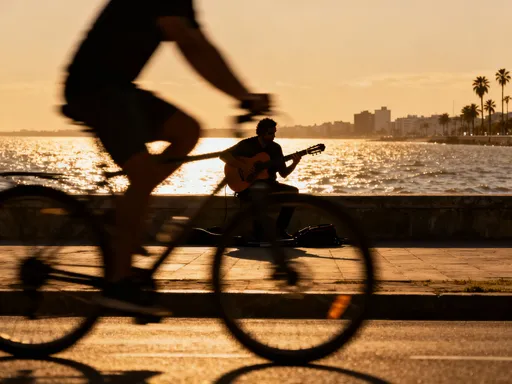
If Montevideo has a soul, it pulses along the Rambla—a sweeping coastal avenue that stretches over 22 kilometers from Punta Carretas to Carrasco in the east and westward through Ciudad Vieja. More than just a scenic walkway, the Rambla is the city’s communal living room, its open-air gym, its evening promenade, and its morning meditation path. It belongs to everyone: joggers with earbuds in, cyclists weaving through the bike lanes, fishermen casting lines into the Río de la Plata, and families spreading out on blankets at Playa Pocitos. This ribbon of concrete, sand, and sea is where Montevideo breathes, where locals reconnect with nature and each other.
The Rambla changes with the light. At sunrise, the water shimmers with liquid gold, and the few early risers—walkers, tai chi practitioners, dog owners—move in silence broken only by waves and seabirds. By mid-morning, the energy shifts. Children chase kites near the shore, couples share mate from thermoses, and vendors begin setting up their small carts selling churros, empanadas, and cold drinks. The rhythm accelerates slightly, but never frantically. There is always space to pause, to sit on a bench, to watch the tide roll in. As afternoon turns to dusk, the Rambla reaches its peak: strollers fill the path, music drifts from portable speakers, and the sky melts into hues of pink and orange above the horizon. This is the moment when the city feels most alive—vibrant, yet peaceful.
Walking the Rambla slowly, without a strict destination, is perhaps the most revealing way to understand Montevideo. Unlike tourist-heavy boardwalks in other capitals, this is not a performance for visitors. It is lived-in, authentic, and deeply integrated into daily routines. A woman jogs with her dog; a grandfather teaches his grandson to fish; a young couple shares a quiet conversation on a seawall. These are not staged scenes but ordinary moments elevated by their beauty and sincerity. The Rambla teaches a subtle lesson: joy is found not in grand events, but in simple, shared experiences. For travelers seeking connection and calm, this stretch of coastline offers both in abundance.
Ciudad Vieja: Where History and Hustle Collide
The old town of Montevideo, known as Ciudad Vieja, is where the city’s past and present engage in a continuous, dynamic conversation. Cobblestone streets wind beneath pastel-colored buildings with wrought-iron balconies, their facades worn by time and sea air. Colonial archways hint at centuries-old foundations, while modern art galleries, independent bookshops, and bustling cafés occupy the same blocks. This is not a preserved relic frozen for tourism—it is a living, working neighborhood where history is not displayed behind glass but lived on every corner.
The Mercado del Puerto, one of the most famous landmarks in Ciudad Vieja, exemplifies this blend. Originally built in the 19th century as a market hall, it has evolved into a culinary destination, especially on weekends when the scent of grilling meat fills the air. Rows of asado grills operate under the high iron roof, serving sizzling chorizo, morcilla, and beef ribs to hungry locals and curious travelers. While the market has become a popular stop on tourist itineraries, it retains an undeniable authenticity. Families gather around long wooden tables, sharing meals and conversation. Waiters weave through the crowd with trays of cold beer and medio y medio—a local blend of dry wine and sparkling cider. The energy is festive, communal, and deeply rooted in Uruguayan tradition.
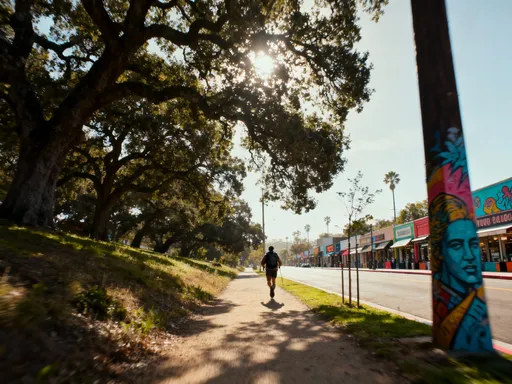
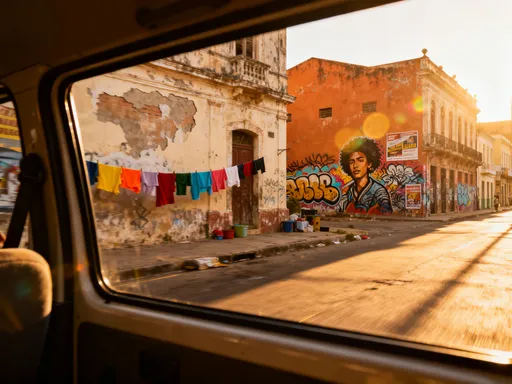
But the true soul of Ciudad Vieja lies beyond the main thoroughfares. Step into quieter plazas like Plaza Zabala or Plaza Matriz, and the pace slows. Elderly residents sit on benches reading newspapers, children play near fountains, and street artists sketch portraits under sun umbrellas. Murals cover side walls, their vibrant colors telling stories of resistance, culture, and identity. These visual narratives stand in contrast to the weathered stone of colonial churches and government buildings, creating a dialogue between eras. It’s here, in these overlooked corners, that travelers often find their most meaningful moments—watching a local couple dance a spontaneous tango, listening to a busker play folk songs on a guitar, or simply sitting with a coffee and absorbing the atmosphere.
Ciudad Vieja is not perfect. Some buildings show signs of neglect, and not every street is brightly lit at night. But these imperfections add to its charm. They speak of a place that is real, evolving, and unafraid of showing its edges. For travelers seeking depth over polish, this neighborhood offers a rich tapestry of experiences—historical, cultural, and deeply human.
Beyond the Guidebook: Finding the Real Montevideo in Barrios
To truly know Montevideo, one must move beyond the postcard sights and explore its barrios—its neighborhoods. Each district has its own character, shaped by generations of families, local traditions, and community rhythms. Pocitos, with its wide avenues and elegant apartment buildings, feels cosmopolitan yet grounded. Buceo, slightly quieter, comes alive on Sundays when the Feria de Buceo transforms quiet streets into a lively marketplace of handmade crafts, vintage clothing, and freshly baked empanadas. Cordón, once a working-class area, now blends historic theaters with trendy cafés and co-working spaces, reflecting the city’s quiet transformation without losing its soul.
These neighborhoods do not exist for tourism. They are lived-in spaces where laundry hangs from balconies, children kick soccer balls in the streets, and neighbors greet each other by name. In Pocitos, families gather at the beach not for photos but for long afternoons of swimming, sunbathing, and sharing snacks. In Buceo, the Sunday market is a weekly ritual, a place to meet friends, support local artisans, and enjoy simple pleasures. There are no entrance fees, no timed tickets—just the organic flow of community life. This authenticity is what makes Montevideo so special. It doesn’t stage experiences; it offers access to real life.
Walking through these barrios, one begins to notice the small details that define a place: the sound of a radio playing tango from an open window, the smell of grilled choripán drifting from a backyard asado, the sight of an elderly woman watering geraniums on her balcony. These moments are not curated; they are part of the city’s daily rhythm. For travelers—especially those who value connection, safety, and a sense of belonging—these neighborhoods offer a rare gift: the chance to experience a destination not as an outsider, but as a temporary member of the community.
The Taste of Connection: Food as a Window to Culture
In Montevideo, food is more than sustenance—it is a language of care, a bridge between people, a celebration of the everyday. The cuisine is not about complexity or presentation, but about warmth, tradition, and togetherness. A choripán—grilled chorizo in a crusty roll, often topped with chimichurri—is not just street food; it is a shared ritual. Whether bought from a cart on the Rambla or served at a backyard gathering, it brings people together. Similarly, the national drink, mate, is rarely consumed alone. Passed from hand to hand, sipped through a metal straw, it symbolizes friendship and continuity.
The asado, Uruguay’s iconic barbecue, is perhaps the most profound expression of this culinary culture. More than a meal, it is an event—often lasting hours, centered around family, conversation, and patience. The grill master tends the fire with quiet focus, while guests sip wine, share stories, and wait without complaint. The food arrives slowly: first the offal, then the sausages, then the prime cuts of beef. Each stage is savored, not rushed. This is not dining as efficiency; it is dining as connection. For travelers, being invited to an asado—even a small one at a local’s home—is one of the highest honors, a sign of genuine welcome.
Coffee culture also plays a vital role in daily life. Small cups of espresso, known as cortados or caffès, are consumed throughout the day, often accompanied by conversation that lasts far longer than the drink itself. Neighborhood confiterías—traditional pastry shops—offer dulce de leche pancakes, milhojas, and facturas, all best enjoyed with a friend and a slow morning. Even grocery shopping feels personal. Local markets and small supermarkets stock regional specialties, from artisanal cheeses to homemade preserves. There is a pride in local products, a belief that good food begins with care and quality.
For the traveler, embracing Montevideo’s food culture is not just about tasting new flavors—it is about participating in a way of life. It is about learning to pause, to share, to savor. In a world that often feels hurried and disconnected, this emphasis on slow, meaningful meals offers a powerful reminder of what truly nourishes the soul.
The Art of Slow Travel: Why Time Is Your Best Guide
Montevideo is not a city that rewards checklists. It does not reveal itself in highlights or soundbites. Instead, it unfolds gradually, like a conversation that deepens over time. The most memorable experiences are often the unplanned ones: an impromptu chat with a shopkeeper, a chance encounter with a street musician, the way sunlight filters through eucalyptus trees after a summer rain. These moments cannot be scheduled, but they can be invited in—by staying longer, moving slower, and listening more.
Slow travel is not a luxury here; it is a necessity for understanding. Choosing to stay in a local alojamiento—perhaps a family-run guesthouse or a quiet apartment in a residential barrio—opens doors that hotels often keep closed. Neighbors may greet you by name, recommend their favorite bakery, or invite you to join a neighborhood event. Sitting in a park with a book, rather than rushing between attractions, allows you to observe the rhythm of daily life. You begin to notice patterns: the schoolchildren walking home in uniforms, the elderly couple feeding pigeons, the deliveryman balancing a stack of bread on his bicycle.
This approach shifts the focus from seeing to feeling. Instead of collecting photos, you collect sensations—the warmth of the sun on your skin, the taste of a fresh empanada, the sound of Spanish spoken with the soft, rolling accent of the Río de la Plata. You start to walk like a local, talk like a guest, and think like someone who belongs, even if only for a little while. This is the essence of meaningful travel: not conquest, but connection. Montevideo does not give up its secrets easily, but for those willing to move at its pace, it offers a depth of experience that lingers long after departure.
Leaving With More Than Memories: How Montevideo Changes You
By the time you prepare to leave Montevideo, something has shifted—not in the city, but in you. You walk a little slower. You smile at strangers more readily. You listen more intently to conversations, not just for meaning, but for tone, for warmth, for the spaces between words. The city does not transform you through grand gestures, but through quiet repetition: the daily ritual of mate, the unhurried pace of the Rambla, the shared silence of a sunset over the water.
You don’t leave with a full camera roll or a list of checked-off attractions. Instead, you carry an intangible gift: a sense of calm, a renewed appreciation for simplicity, a deeper understanding of what it means to belong, even temporarily. Montevideo does not sell experiences; it offers presence. It reminds you that travel is not about escaping life, but about returning to it—with fresh eyes, an open heart, and a slower step.
For many travelers, especially women balancing family, work, and personal well-being, this kind of journey is not just enjoyable—it is restorative. Montevideo does not demand energy; it replenishes it. It does not overwhelm; it welcomes. And in that welcome, there is a quiet power—a reminder that the best destinations are not just places on a map, but feelings in the soul. That is the true magic of Montevideo. That is why, long after you’ve returned home, you’ll find yourself closing your eyes and breathing deeply, as if you can still smell the sea, still hear the laughter on the Rambla, still feel the city breathing through you.