Off the Menu in the Lake District: The Hidden Eats Only Locals Know
Nestled among misty fells and shimmering lakes, the Lake District is more than just a postcard landscape—it’s a haven of culinary secrets waiting to be tasted. Beyond the tourist trails, tucked in quiet villages and behind unmarked doors, lie cozy inns, family-run cafés, and farmstead kitchens serving dishes steeped in tradition. I set out to uncover the flavors locals love but rarely share. What I found wasn’t just food—it was heritage on a plate. Each bite told a story of generations tending sheep-dotted hills, harvesting wild herbs from ancient woodlands, and preserving summer’s bounty for long winter nights. This is a region where meals are not performances for visitors but daily rituals of care, connection, and continuity.
Why the Lake District’s Food Scene Deserves More Than a Passing Glance
The Lake District, a UNESCO World Heritage Site since 2017, is celebrated globally for its dramatic scenery—rolling fells, glassy lakes, and stone cottages draped in ivy. Yet, while millions come for the views, few pause long enough to truly taste the region. Its culinary culture, deeply rooted in centuries of rural life, remains one of England’s best-kept secrets. This is not a destination for flashy fusion or trend-driven menus. Instead, the food here reflects the land itself: rugged, honest, and quietly resilient.
The region’s agricultural heritage shapes every aspect of its cuisine. The hills, blanketed with coarse grasses and heather, are ideal for hardy Herdwick sheep, a breed native to the area and prized for its rich, flavorful meat. These animals graze freely across open commons, their diet and movement contributing to the distinct taste of Herdwick lamb, now protected under European geographical indication status. Equally iconic is the Cumberland sausage, traditionally made with a coarse grind and a blend of herbs including sage and nutmeg, coiled in a distinctive ring rather than linked. Its origins trace back to border regions where preservation and flavor were equally important.
Equally emblematic is Cartmel sticky toffee pudding, a dense date-infused cake drenched in warm toffee sauce, first made in the village of Cartmel at the south end of Lake Windermere. What began as a humble dessert in a country inn has become a national favorite, yet the original recipe, made with locally sourced butter and free-range eggs, retains a depth of flavor no mass-produced version can replicate. These dishes are not merely regional specialties—they are cultural anchors, symbols of identity passed down through family kitchens and village feasts.
Seasonality is not a trend here; it is a necessity. The Lake District’s climate, with cool summers and wet winters, has long required communities to preserve, ferment, and store. Apple orchards yield cider; root vegetables are pickled; game is hung and cured. Even today, many households maintain smokehouses, root cellars, and jam pantries. This deep respect for timing and terroir means that the best meals are not found on demand but in rhythm with the land’s natural cycles.
The Art of Finding Hidden Eateries: Beyond Guidebooks and Ratings
In an age of curated online reviews and algorithm-driven recommendations, the true gems of the Lake District often remain invisible. Many of the most beloved local spots have no website, no social media presence, and no place on digital maps. They operate on instinct, tradition, and community trust. A café might open only when the baker feels well enough to rise at dawn. A pub kitchen may close early once the stew runs out. These are not inconveniences but part of the rhythm of rural life—and learning to move with that rhythm is key to uncovering its rewards.
Word-of-mouth remains the most powerful tool for discovery. A conversation with a shopkeeper in a village grocer, a chat with a farmer at a livestock market, or even a passing remark from a walker on a footpath can lead to a meal that no guidebook could have predicted. Locals often speak in subtle cues: “The pie’s best on Thursdays,” or “Try the back room at the old coaching inn when the mist rolls in.” These hints, delivered with a smile or a knowing glance, are invitations to participate in a quiet, unwritten culture of hospitality.
Timing visits to coincide with local events significantly increases the chances of stumbling upon hidden offerings. Farmers’ markets, held weekly in towns like Kendal, Keswick, and Ambleside, are not just shopping destinations but social hubs. Here, one might find a stall selling homemade pikelets (a type of small griddle cake) made with local buckwheat flour, or a vendor offering jars of sloe gin crafted from berries foraged in nearby hedgerows. Some of the best meals begin not in a restaurant but at a market counter, where a warm sausage roll and a cup of spiced cider spark a conversation that leads to an invitation.
Observation is equally important. A chalkboard propped in a churchyard gate, advertising “Hot Pot Sunday” at the village hall, may signal a monthly community meal featuring slow-cooked lamb and dumplings. A smoke curling from a cottage chimney in a remote valley might indicate a wood-fired oven in use. These signs require patience and presence. The traveler must be willing to wander without a fixed destination, to pause, to listen, and to accept that some discoveries cannot be planned—only welcomed.
Village Gems: Where Tradition Meets the Table
Scattered across the Lake District are villages that seem lifted from another century—stone-built, slate-roofed, and nestled in folds of the land where the fells meet the lakes. In places like Grasmere, Hawkshead, and Mardale, time moves differently. Here, tearooms have operated for generations, their scones baked daily, their clotted cream sourced from nearby dairies. These are not tourist traps but community institutions, where regulars are greeted by name and newcomers are welcomed with quiet warmth.
One such place, a tearoom in a valley village near Ullswater, opens only from April to October, run by a retired schoolteacher and her daughter. The menu changes weekly, based on what is fresh from the garden or available at the market. A typical offering might include a leek and Wensleydale tart, made with cheese from a nearby creamery, or a bowl of nettle soup, foraged from the riverbank and thickened with a splash of local cream. The scones, golden and crumbly, are served with homemade strawberry jam and a dollop of thick, yellow cream. There is no espresso machine, no gluten-free options, no vegan substitutes—only food made with care, as it has been for decades.
Equally cherished are the centuries-old pubs that double as dining halls. In a hamlet near Coniston Water, a whitewashed inn dating back to the 1600s serves a Sunday roast that draws locals from miles around. The beef comes from a neighboring farm, slow-roasted for hours until the fat renders into crisp edges. The Yorkshire puddings rise tall and golden, the gravy rich and deeply savory. Portions are generous, not for show but out of habit—a reflection of a culture where no guest should leave hungry. The atmosphere is warm, with low beams, a crackling fire, and the murmur of conversation blending with the clink of cutlery.
These places thrive on consistency, not novelty. The recipes are not written down but remembered—a pinch of this, a handful of that. A baker might say, “I make it the way my mother did,” and leave it at that. This oral tradition preserves flavors that industrial production cannot replicate. It also creates a sense of belonging: to eat here is to be included in a story that began long before you arrived and will continue long after you leave.
Farm-to-Table Done Right: Meet the Producers Behind the Plate
The authenticity of the Lake District’s hidden meals begins long before the plate. It starts in the soil, the hives, the pastures, and the hands of small-scale producers who work with quiet dedication. These artisans are the unseen pillars of the region’s food culture, supplying hidden kitchens with ingredients of exceptional quality and traceability. Their work is not driven by profit margins but by a deep connection to the land and a commitment to craft.
Take, for example, a family-run goat dairy in the western fells. For over thirty years, they have tended a small herd, milking by hand and aging their cheese in a natural limestone cave. The cool, humid environment allows the rind to develop complex flavors—earthy, tangy, with a hint of wild thyme carried on the breeze. This cheese, sold only at local markets and to a few trusted inns, is never labeled or branded. Yet those who know it consider it one of the region’s finest.
Similarly, a beekeeper on the slopes of Skiddaw maintains hives placed in high meadows where wildflowers bloom in abundance. The honey, golden and floral, carries traces of heather, bilberry, and clover. It is harvested once a year, in late summer, and sold in simple jars with handwritten labels. Some of it finds its way into the kitchens of village cafés, where it sweetens porridge or glazes hot scones. Others use it in traditional remedies, believing in its natural soothing properties.
Foraging is another vital thread in this culinary tapestry. A retired botanist, known locally for her knowledge of edible plants, gathers wild garlic from ancient woodlands in spring, elderflowers in early summer, and chanterelles in the damp autumn woods. She shares her harvest with a handful of chefs and home cooks, never selling it but gifting it as part of a reciprocal culture of sharing. These ingredients, fleeting and seasonal, elevate simple dishes into something extraordinary.
What unites these producers is a shared philosophy: food should be grown, raised, and prepared with intention. There is no rush, no mass production, no compromise. Their work ensures that when a traveler sits down to a meal in a hidden kitchen, they are not just eating food—they are tasting a landscape, a history, and a way of life.
Seasonal Secrets: What to Eat and When
To experience the Lake District’s food at its peak, one must align their visit with the rhythm of the seasons. Each time of year brings its own flavors, its own rituals, and its own fleeting delights. A spring visit offers the first tender shoots of wild garlic and the arrival of new-season lamb, milk-fed and delicate. Summer bursts with berries—cloudberries, raspberries, and blackcurrants—used in jams, crumbles, and fool desserts. Autumn is the season of abundance: game birds like pheasant and grouse appear on menus, while apples are pressed into cider and perry. Winter, though quiet, is rich with preserved foods—smoked fish, pickled vegetables, and spiced cakes stored for the dark months.
One of the best times to visit is late September, when the annual Grasmere Gingerbread Fair takes place. This centuries-old event celebrates a unique local treat: a soft, spiced gingerbread made with black treacle and ground ginger, sold only in one shop in the village. The fair includes traditional games, music, and, of course, plenty of gingerbread. It is a joyful expression of community pride and culinary heritage.
Another highlight is the Cartmel Racecourse Food Festival in June, where local producers gather to showcase their goods. Visitors can sample artisan cheeses, cold-pressed oils, and handmade chocolates while watching horse races on the green. The atmosphere is festive but unhurried, with families picnicking on blankets and children chasing bubbles across the field.
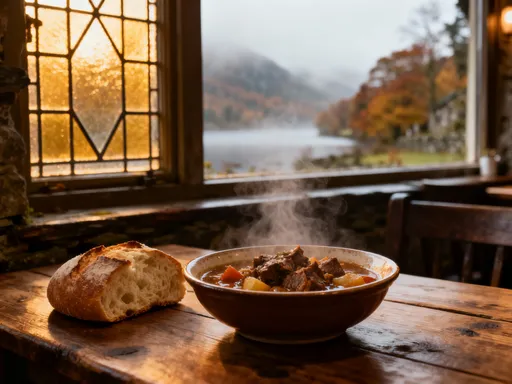
For those seeking a quieter experience, winter Sundays offer some of the most comforting meals. Many village pubs serve a special roast during the colder months, often featuring venison from the local estate or beef from long-horned cattle raised on fell pastures. The meal is served with roasted root vegetables, buttery mashed potatoes, and a glass of mulled wine or locally brewed ale. It is food meant to warm the body and soul, perfect after a long walk through snow-dusted hills.
By planning a trip around these seasonal moments, travelers gain more than just a meal—they gain a deeper understanding of how the land shapes life here. The food is not separate from the landscape; it is an extension of it.
Navigating the Experience: Practical Tips for a Flavor-Filled Journey
Exploring the Lake District’s hidden food scene requires preparation, but not the kind that stifles spontaneity. The region’s charm lies in its unpredictability, yet a few practical steps can ensure a smooth and rewarding journey. Transportation is key: while public buses connect major towns, having a car allows access to remote villages and farm stands. Walking and cycling are also excellent options, especially in summer, with well-marked trails linking villages and scenic routes passing orchards, farms, and riverside inns.
Opening times can be irregular. Many small eateries operate on limited schedules—a café open only on weekends, a pie shop closed on Tuesdays, a pub kitchen that shuts at 7 p.m. Checking local noticeboards, calling ahead, or consulting village shops upon arrival can prevent disappointment. Some places do not accept cards, so carrying cash is advisable. Seating may be limited, especially in older buildings with low ceilings and narrow rooms, so arriving early or being flexible with timing helps secure a spot.
Booking is rarely possible at the smallest kitchens, but larger inns and restaurants in towns like Windermere or Keswick may require reservations, especially during peak seasons. When in doubt, a polite inquiry at a local information center or post office often yields the most accurate, up-to-date advice.
Etiquette matters in intimate settings. These are not impersonal dining rooms but homes-away-from-home, where owners may serve food themselves and remember your order from last year. A simple “thank you,” a smile, and patience if service is slow go a long way. Tipping is appreciated but not expected in small village spots, though leaving a few extra pounds for exceptional service is a thoughtful gesture.
Accessibility varies. While many towns have adapted historic buildings with ramps and accessible restrooms, some remote locations remain challenging for those with mobility issues. When in doubt, contacting a venue in advance or consulting the Lake District National Park Authority’s accessibility resources can help plan an inclusive visit without sacrificing authenticity.
Beyond the Plate: How Food Deepens the Travel Experience
To eat in the hidden corners of the Lake District is to do more than satisfy hunger. It is to engage with a culture of care, continuity, and connection. A shared meal in a village hall, a cup of tea offered by a farmer after a long walk, a slice of gingerbread passed between strangers—these moments create memories that outlast any photograph. They remind us that travel is not just about seeing new places but about feeling part of them, even if only for a day.
Food here is a bridge. It connects the visitor to the land, to its history, and to its people. It invites participation in a way that sightseeing alone cannot. To taste Herdwick lamb is to understand the resilience of the fells. To eat nettle soup is to appreciate the wisdom of foraging. To share a scone with clotted cream is to join a tradition of hospitality that has warmed travelers for generations.
In a world of fast consumption and fleeting experiences, the Lake District’s hidden kitchens offer something rare: slowness, authenticity, and meaning. They remind us that the best journeys are not measured in miles but in moments of connection—in the warmth of a fire, the clink of a teacup, the smile of someone who says, “Try this. It’s what we eat at home.”
So when you next plan a trip to this misty, magical region, look beyond the postcard views. Seek the unmarked door, follow the scent of baking bread, and listen for the quiet hum of a kitchen where tradition lives. Let your journey be guided not by ratings or algorithms, but by curiosity, respect, and an open heart. For in the end, the true flavor of the Lake District is not just in its food—it is in the spirit of those who make it, serve it, and share it, one honest meal at a time.