Cuba’s Flavor Heartbeat: A Real Food Lover’s Walk Through Trinidad
You know that feeling when a place just *tastes* like magic? That’s Trinidad, Cuba. I’m not exaggerating—every bite, from street-corner *frituras* to slow-cooked *moros*, tells a story. This isn’t just a town frozen in time; it’s a living kitchen where culture simmers in every pot. If you’re craving authentic Cuban flavors beyond Havana’s buzz, this is your must-try journey. Nestled along the southern coast of central Cuba, Trinidad enchants with its cobblestone streets, pastel-hued colonial buildings, and a culinary rhythm that pulses through daily life. Here, food is more than nourishment—it’s memory, identity, and connection, all served on a chipped ceramic plate with a warm smile.
Why Trinidad Should Be Your Next Food Adventure
Trinidad stands apart as one of Cuba’s best-preserved colonial towns, recognized by UNESCO for its architectural integrity and cultural significance. Unlike the more tourist-heavy areas of Havana or Varadero, Trinidad offers a quieter, more intimate experience where local traditions remain deeply rooted in everyday life. The town’s layout—centered around the cobbled Plaza Mayor, flanked by pastel-colored mansions and shaded by royal palms—creates a picturesque backdrop for a culinary journey that feels both timeless and immediate. What makes Trinidad particularly special for food lovers is how seamlessly cooking is woven into the fabric of the community. Kitchens spill into courtyards, street vendors set up near church steps, and the scent of garlic, cumin, and frying plantains drifts through open windows in the late afternoon.
The city’s unique flavor profile emerges from a blend of African, Spanish, and Caribbean influences, shaped by centuries of trade, migration, and adaptation. Enslaved Africans brought knowledge of root vegetables and stewing techniques, while Spanish colonizers introduced rice, pork, and olive oil. Over time, these elements merged into a cuisine that is hearty, flavorful, and deeply resourceful. In Trinidad, meals are often prepared with what is available, leading to a kind of culinary ingenuity that turns simple ingredients into soul-satisfying dishes. The tropical climate supports year-round growing of plantains, yucca, and tropical fruits, all of which play starring roles in local plates.
What truly sets Trinidad apart is its authenticity. While other destinations cater heavily to tourist tastes, Trinidad maintains a strong sense of self. Locals eat what they’ve always eaten, and visitors who seek out home-cooked meals are welcomed into that tradition. There’s no pretense here—just honest food made with care. The slow pace of life encourages lingering over meals, sharing stories, and savoring each bite. For a 30- to 55-year-old woman traveling for enrichment and connection, Trinidad offers not just a meal, but a meaningful encounter with a culture that values hospitality, resilience, and joy in the everyday.
The Soul of Cuban Cuisine: Understanding Local Ingredients
To appreciate Trinidad’s food, one must first understand its ingredients—humble, fresh, and deeply symbolic. At the heart of most meals is the combination of rice and black beans, known as *moros y cristianos* (Moors and Christians), a dish that reflects the island’s complex cultural mix. Plantains, both green and ripe, are used in countless ways: fried into crispy *tostones*, boiled into soft *maduros*, or mashed into *fufu*. Root vegetables like malanga and boniato (white yam) are staples, often boiled or fried and served as side dishes. These ingredients are not just dietary choices—they are lifelines, shaped by decades of economic constraints and limited access to imported goods.
Due to the long-standing U.S. trade embargo and Cuba’s centralized economy, many modern conveniences and processed foods are scarce. This scarcity, however, has fostered a culture of creativity and self-reliance. In Trinidad, urban gardens known as *organopónicos* play a crucial role in supplying fresh produce. These small-scale, organic farms use raised beds and compost to grow vegetables like tomatoes, onions, and peppers in the middle of residential neighborhoods. Farmers also bring goods from nearby rural areas to local markets, ensuring that much of what ends up on the table is seasonal and locally sourced. This farm-to-table reality isn’t a trend—it’s a necessity, and it results in food that tastes genuinely fresh and full of character.
Another cornerstone of Trinidad’s cooking is *sofrito*—a flavor base made by sautéing onions, garlic, bell peppers, and sometimes tomatoes in oil. This mixture forms the foundation of stews, beans, and rice dishes, giving them depth and warmth. Spices are used thoughtfully rather than abundantly; oregano, cumin, and bay leaf appear regularly, but the goal is never to overpower. Instead, seasoning enhances the natural taste of the ingredients. Pork and chicken are the most common proteins, often slow-cooked until tender, while fresh seafood—such as snapper, shrimp, and lobster—can be found in coastal areas near Playa Ancón, just a short walk from town. The result is a cuisine that feels grounded, comforting, and deeply nourishing.
Street Food Gems You Can’t Miss
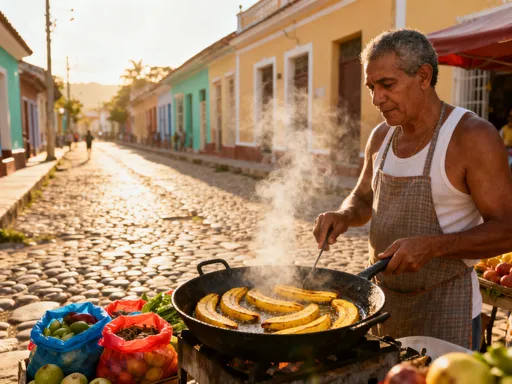
No visit to Trinidad is complete without exploring its vibrant street food scene. Scattered throughout the historic center, especially near Plaza Mayor and along Callejón del Chorro, small vendors offer quick, delicious bites that reflect the city’s culinary soul. One of the most popular treats is the *chicharrón*—crispy fried pork belly or rinds, often served in a paper cone with a squeeze of lime. The crunch is irresistible, and the rich, savory flavor captures the essence of Cuban comfort food. Nearby, you’ll find stands selling *empanadas de carne*, golden-fried pastries filled with seasoned ground beef, onions, and peppers. They’re handheld perfection, ideal for eating while strolling under the shade of mango trees.
Another must-try is the *tostón*—a flattened, twice-fried green plantain disc that’s crispy on the outside and tender inside. Vendors typically serve them with a small cup of garlic sauce or a sprinkle of salt. Equally delightful are *frituras de malanga*, fritters made from grated malanga root, mixed with herbs and deep-fried until golden. These are often sold alongside sweet versions made with coconut or corn. For something uniquely Cuban, seek out the *cucurucho*—a conical treat made from sweetened coconut, raisins, and spices, wrapped in a corn husk and steamed. A smile and a few Cuban pesos (CUP) are all it takes to enjoy one from a grandmotherly vendor who’s been making them for decades.
When sampling street food, it’s wise to follow a few practical tips. First, look for stalls with high turnover—where locals are lined up, the food is likely fresh and safe. Avoid anything left sitting in the sun for hours, especially meat-based items. Since restrooms and handwashing stations are limited, carrying hand sanitizer is highly recommended. Prices are extremely affordable: most snacks cost between 10 and 30 CUP (less than $1 USD), making it easy to try a variety without overspending. These small bites aren’t just convenient—they’re a direct link to everyday Cuban life, offering a taste of how locals feed themselves between meals.
Paladares with Personality: Where to Eat Like a Local
In the past decade, Trinidad has seen a quiet revolution in its dining scene—the rise of *paladares*, family-run private restaurants operating out of homes. These establishments emerged after Cuba expanded self-employment opportunities, allowing enterprising families to turn their kitchens into licensed eateries. Unlike state-run restaurants, which can be inconsistent in quality and service, paladares offer a more personal, authentic experience. They’re often tucked into colonial houses with tile floors, ceiling fans, and courtyard seating, where meals feel like dinner at a friend’s house.
Some well-known paladares in Trinidad include those located near Parque Central or along quieter side streets like Callejón del Capiro. These are not exclusive or celebrity-owned—they’re modest, family-operated spaces where the mother cooks, the daughter serves, and the grandfather greets guests at the door. Menus tend to feature classic Cuban dishes: *ropa vieja* (shredded beef in tomato sauce), *lechón asado* (roast pork), *yuca con mojo* (cassava in garlic-citrus sauce), and *arroz con pollo* (chicken with rice). Portions are generous, flavors are home-style, and the pace is relaxed. Meals often begin with a simple green salad or a cup of black bean soup and end with strong Cuban coffee and a slice of guava pastelito.
Prices in paladares are reasonable, especially when compared to tourist hotels. A full meal with drink typically ranges from 8 to 15 CUC (before the currency reform) or the equivalent in newer monetary units, though many now accept cards or digital payments in addition to cash. Reservations are recommended during peak seasons—December to March—when European and Canadian visitors flock to Cuba’s warm winter climate. While these restaurants welcome photography, it’s polite to ask before taking pictures of the family or their home. Sitting down in a paladar is more than a meal—it’s an invitation into Cuban domestic life, where food is served with pride and warmth.
Market Hopping: From Mercado Agropecuario to Hidden Stalls
For a deeper understanding of Trinidad’s food culture, a visit to the local agricultural market—known as *Mercado Agropecuario*—is essential. Held in a covered pavilion on the edge of town, this market buzzes with activity every morning, especially on weekdays. Farmers from surrounding villages arrive before dawn to sell their harvest directly to locals and curious travelers. Walking through the stalls, you’ll see pyramids of tropical fruit—mamey, guava, papaya, and starfruit—alongside heaps of root vegetables, fresh herbs, and bunches of green bananas. Live chickens cluck in wire cages, while others display handmade cheeses, dried beans, and spices sold in paper cones.
One of the most refreshing experiences here is drinking fresh *guarapo*—sugarcane juice pressed on the spot using a hand-cranked mill. The vendor feeds stalks into the rollers, and thick, sweet juice pours into a glass, often served over ice. It’s a natural energy boost, perfect for cooling down in the tropical heat. Shoppers also pick up snacks like *maduros* (fried ripe plantains) or small bags of roasted peanuts to enjoy later. Bargaining is common but gentle; prices are already low, so haggling should be done respectfully. Vendors appreciate polite conversation in Spanish, even if just a few words, and a smile goes a long way.
The market is not just a place to buy food—it’s a window into daily Cuban life. Women in headscarves compare yucca roots, grandfathers haggle over egg prices, and children sneak bites of mango while their parents shop. For the visiting woman who values authenticity and connection, this is where tourism fades and real life unfolds. Visiting on a weekday morning ensures the best selection and the most vibrant atmosphere. Bring a small reusable bag for purchases, wear comfortable shoes, and allow time to wander. You may leave with more than groceries—you may leave with a new appreciation for how food sustains a community.
Beyond the Plate: Food Experiences That Tell a Story
Trinidad offers more than meals—it offers experiences that deepen your understanding of where food comes from and why it matters. One of the most rewarding activities is joining a home-cooking demonstration, often hosted by local women in their own kitchens. These informal sessions might begin with a trip to the market, followed by hands-on lessons in making *moros*, mashing *fufu*, or assembling *empanadas*. As you cook, the host shares stories—how her grandmother taught her to season beans just right, how holidays mean extra pork and extra laughter, how sugar and coffee once shaped the fate of the entire region.
Another enriching outing is a visit to a coffee farm in the nearby Valle de los Ingenios, a UNESCO-recognized valley that was once the heart of Cuba’s sugar industry. Small family-run farms now cultivate organic coffee using traditional methods. Tour guides explain how beans are picked, dried, and roasted, then invite guests to taste the final brew—strong, dark, and sweetened with a cube of raw sugar. The experience connects flavor to history, revealing how enslaved labor once powered this land and how today’s farmers are reclaiming it with dignity.
Similarly, a tour of a small-scale rum distillery offers insight into one of Cuba’s most famous exports. Using molasses from sugarcane, artisans ferment and age rum in oak barrels, producing smooth, amber spirits. Visitors learn about aging processes, sample different varieties, and gain respect for the craftsmanship behind each bottle. These immersive experiences go beyond taste—they foster empathy, curiosity, and gratitude. By talking with hosts, asking questions, and expressing appreciation, travelers become part of a cultural exchange that enriches both guest and host.
Practical Tips for a Smooth, Flavor-Filled Trip
To fully enjoy Trinidad’s culinary offerings, a few practical considerations will make your trip smoother and more enjoyable. First, remember that Cuba operates largely on a cash-based economy, especially outside major hotels. While some paladares and shops now accept cards, it’s wise to carry enough Cuban pesos (CUP) for street food, markets, and small purchases. Break larger bills whenever possible, as change can be hard to find. Keep cash in a secure, interior pocket or money belt, especially in crowded areas.
Hydration is crucial in the tropical climate. Carry a reusable water bottle and refill it with filtered or bottled water—tap water is not safe to drink. Many guesthouses and restaurants provide purified water for guests. Mosquito repellent is another essential, particularly in the early morning and evening when insects are most active. Wear light, breathable clothing and comfortable walking shoes—Trinidad’s cobblestone streets are charming but uneven and can be slippery when wet.
When dining, embrace the local pace. Meals are not rushed; service may be slow, and dishes arrive when they’re ready. This isn’t inefficiency—it’s a different rhythm of life, one that values presence over speed. Be open to unexpected moments: a local might invite you to share a meal, a child may offer a piece of fruit, or a musician might serenade your dinner. These spontaneous interactions are often the most memorable parts of the journey. Finally, approach your visit with humility and respect. Ask permission before photographing people, speak politely, and thank your hosts sincerely. When you do, you’re not just a tourist—you’re a guest welcomed into a living culture.
Trinidad doesn’t serve food—it shares it. Every dish carries generations of resilience, creativity, and joy. By traveling here with curiosity and respect, you’re not just eating Cuban culture—you’re becoming part of it. Pack your appetite, not your expectations, and let the flavors lead the way.